








RACCOON REMOVAL AND CONTROL

RACCOONS MOVED IN?

WE'LL GET THEM OUT

Humane Raccoon Removal logo with black script text on a white background

Raccoons can turn attics into den sites and damage your home. We inspect Leesburg properties, identify entry points, and check for young before removal. We then address exclusion, sealing, cleanup, and repairs to help keep raccoons from returning.

Green raccoon face logo inside a green circle on a white background

Humane

Removal

Green shield outline containing a green silhouette of Florida on a white background

Florida Law

Compliant

Green house icon with shield and checkmark, suggesting home security or protection

Entry Point

Sealing

Green broom with dustpan and a small pile of dirt on a white background

Clean Up

And Repair

COMMON RACCOON ISSUES WE HANDLE

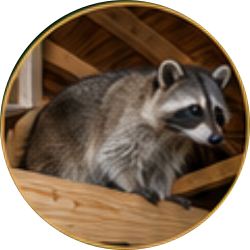
Raccoon standing on a wooden ledge inside a circular frame

ATTIC DENS


Raccoons settle into attics, disturbing insulation and stored items.

Three raccoons peeking out from a wooden den opening

NURSERY DENS


A mother may choose a sheltered attic or chimney to raise her young.

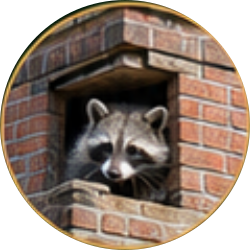
Raccoon peeking out of a brick building opening

CHIMNEY DENS


An uncapped chimney can become a sheltered den for resting raccoons.

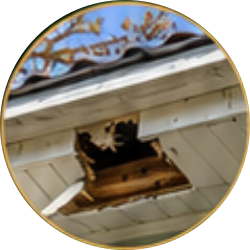
Damaged roof with a large hole exposing wood and a branch above the siding

ROOF DAMAGE


Raccoons may pull at weakened roof edges and soffits to gain access.

Raccoon standing on hind legs peeking into a gray trash bin outdoors

FOOD SOURCES


Open trash bins and outdoor pet food can draw raccoons back nightly.

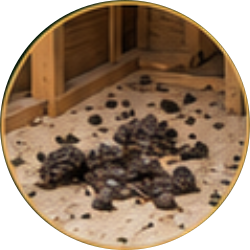
Scattered animal droppings on a wooden floor near a wall

WASTE AND ODOR


Repeated use of a den or latrine may leave droppings and foul odors.

RACCOON REMOVAL AND CONTROL

RACCOONS MOVED IN?

WE'LL GET THEM OUT

Humane Raccoon Removal logo with black script text on a white background

Raccoons can turn attics into den sites and damage your home. We inspect Leesburg properties, identify entry points, and check for young before removal. We then address exclusion, sealing, cleanup, and repairs to help keep raccoons from returning.

COMMON RACCOON ISSUES WE HANDLE

Raccoon standing on a wooden ledge inside a circular frame

ATTIC DENS


Raccoons settle into attics, disturbing insulation and stored items.

Three raccoons peeking out from a wooden den opening

NURSERY DENS


A mother may choose a sheltered attic or chimney to raise her young.

Raccoon peeking out of a brick building opening

CHIMNEY DENS


An uncapped chimney can become a sheltered den for resting raccoons.

Damaged roof with a large hole exposing wood and a branch above the siding

ROOF DAMAGE


Raccoons may pull at weakened roof edges and soffits to gain access.

Raccoon standing on hind legs peeking into a gray trash bin outdoors

FOOD SOURCES


Open trash bins and outdoor pet food can draw raccoons back nightly.

Scattered animal droppings on a wooden floor near a wall

WASTE AND ODORS


Repeated use of a den or latrine may leave droppings and foul odors.

Damaged soffit under a tiled roof, with exposed wood and a missing vent opening

SIGNS YOU MAY HAVE A RACCOON PROBLEM

Black checkmark inside a circle icon on a white background

Heavy footsteps or scratching coming from the attic.

Black checkmark inside a circular outline icon on a white background

Droppings repeatedly left in one spot near the home.

Black checkmark inside an incomplete circle icon on a white background

Torn soffits, damaged vents, and roof-edge openings.

Checkmark inside a circular outline icon

Strong odors coming from an attic or crawlspace den.

Black circular checkmark icon on a white background

Hand-shaped tracks on decking, roofs, or loose soil.

Black outlined checkmark inside a circle icon on a white background

Trash scattered near open bins or outdoor pet bowls.

Damaged soffit under a tiled roof, with exposed wood and a missing vent opening

SIGNS YOU MAY HAVE A RACCOON PROBLEM

Black checkmark inside a circular arrow icon on a white background

Heavy footsteps or scratching coming from the attic.

Circular checkmark icon with a black check inside a partially outlined circle on a white background

Droppings repeatedly left in one spot near the home.

Checkmark inside a circular arrow icon, black on white background

Torn soffits, damaged vents, and roof-edge openings.

Checkmark inside a circular arrow icon, black on white background

Strong odors coming from an attic or crawlspace den.

Black checkmark in a circle icon on a white background

Hand-shaped tracks on decking, roofs, or loose soil.

Black outlined checkmark inside a partial circle icon on a white background

Trash scattered near open bins or outdoor pet bowls.

OUR RACCOON REMOVAL PROCESS

Black magnifying glass icon inside a thin gold circle on a white background

INSPECT

Identify entry points and check dens for any young.

Black clipboard checklist icon inside a gold-outlined circle.

PLAN

Outline removal methods for the animals and access.

Black house icon with a puzzle-piece cutout, inside a gold circle on a white background

EXCLUDE & REMOVE

Remove all raccoons, then close their entry points.

Black broom icon with a small fish beside it inside a tan circle on a white background

CLEAN UP

Clear away droppings, odors, and soiled insulation.

Black outlined information icon in a circle on a white background

Check for dependent young before removing raccoons or sealing an active den.

COMMON PLACES RACCOONS MAKE DENS
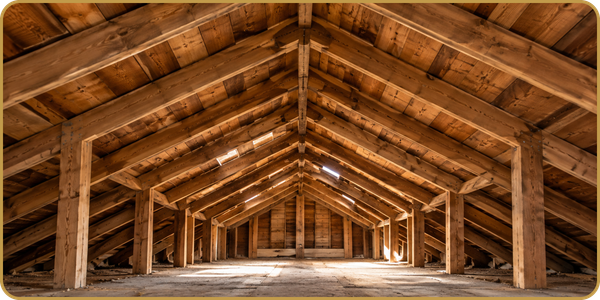
Wooden barn loft interior with exposed beams and warm sunlight

ATTICS

Enclosed attic spaces offer raccoons sheltered dens.
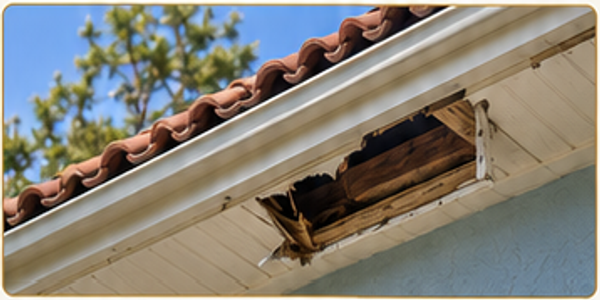
Damaged white soffit under a tiled roof with a hole exposing wooden rafters and blue sky above

EAVES

Broken soffit panels can give raccoons attic access.
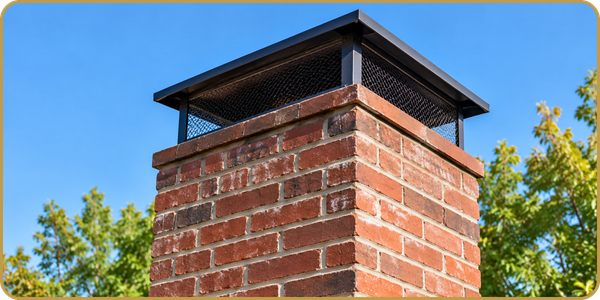
Brick chimney with a black metal cap against a blue sky and trees

CHIMNEYS

Uncapped chimney openings can become sheltered dens.
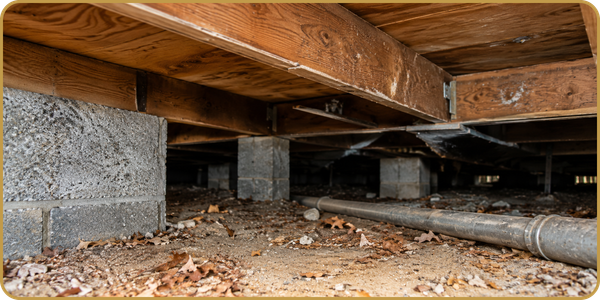
Low crawlspace under a wooden house with beams, insulation, and a metal duct on the ground.

CRAWL SPACES

An open crawl space can provide shelter under homes.
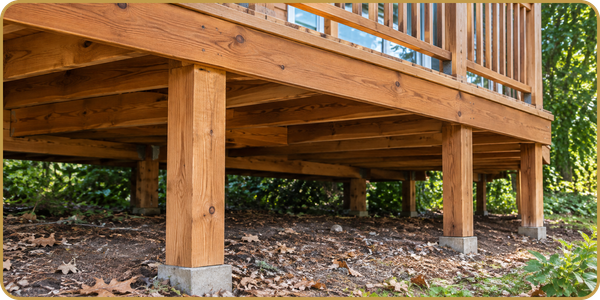
Wooden deck on concrete footings over gravel, with railing and greenery in the background

DECKS

Covered spaces beneath decks may conceal a den site.
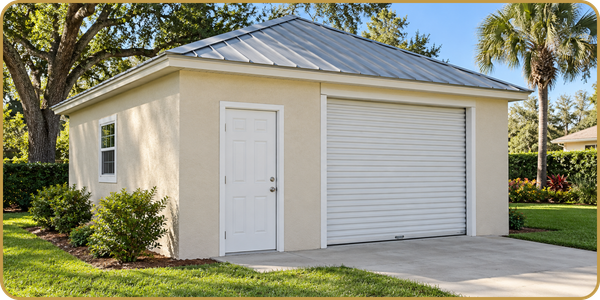
Small beige garage building with a white door, roll-up garage door, and palm trees nearby

OUT BUILDINGS

Quiet sheds and outbuildings also provide den sites.

WHY RACCOONS CHOOSE A STRUCTURE

Green house icon with a roof and open doorway

SHELTERED DENS

Enclosed dens provide cover from storms and weather.

Green recycling bin icon with three figures inside

EASY FOOD

Open trash and pet food often attract repeat visits.

Dark green leaf-shaped logo with a white curved accent in the lower left

WATER SOURCES

Ponds and outdoor water bowls draw thirsty raccoons.

Green tree next to a small house icon on a white background

ROOF ACCESS

Nearby tree limbs give raccoons a route to rooftops.

Two dark green raccoons, one large and one small, on a white background

NURSERY SPACE

Secluded dens provide a place for mothers and young.

Green mute speaker icon with an X symbol

LOW DISTURBANCE

Quiet, unused spaces help raccoons rest undisturbed.

FREQUENTLY ASKED QUESTIONS ABOUT RACCOONS

  • How do raccoons get into an attic?

    Raccoons can enter through damaged soffits, loose vents, and gaps along the roofline. They may pull at weakened materials to enlarge an opening. Overhanging tree branches can give them easier access to the roof, where an attic offers a sheltered place to rest or raise young.

  • What if there are baby raccoons in my home?

    Don't seal the entry point or remove the mother without checking for young. Babies may be unable to leave on their own, and a mother separated from them may damage the home trying to get back inside. Contact A&E so the den can be inspected before removal begins.

  • How do you keep raccoons from coming back?

    Once all raccoons are out, entry points need to be sealed and damaged areas repaired. Securing trash lids and bringing pet food indoors also helps reduce return visits. Removal alone leaves the same shelter and food available for another raccoon to find.

  • Can a raccoon be released somewhere else?

    Sometimes, but Florida has specific relocation requirements. An off-site release location must be in the same county as the capture site, cover at least 40 contiguous acres, and have written permission from the landowner. Transport must also comply with any local rabies alerts or quarantine restrictions.

  • Does a daytime sighting mean a raccoon is sick?

    No. Healthy raccoons sometimes move around during daylight, particularly when food is available. A daytime sighting alone doesn't indicate illness. Give the animal space and avoid feeding or approaching it. If it appears injured or behaves abnormally, keep people and pets away and contact local animal control.

  • Do I need cleanup after raccoons are removed?

    If raccoons have left droppings or contaminated insulation, cleanup may be needed after removal. Their droppings can contain roundworm eggs, so avoid disturbing the affected area. An inspection can determine what material needs to be removed. Odor treatment alone doesn't remove droppings or address the contamination they leave behind.